May 2026 Volunteer Highlights

Small Actions, Lasting Impact

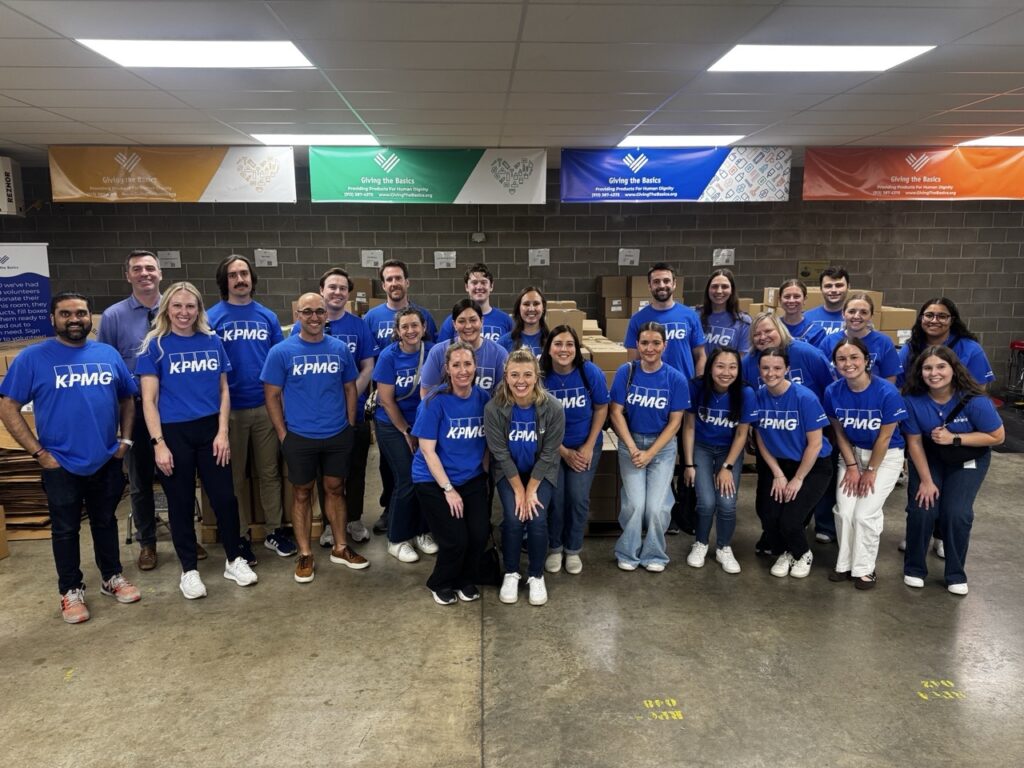
KPMG Volunteer Group

KPMG Volunteer Group

Every volunteer shift at Giving the Basics starts the same way: a group of people walks through our doors ready to help. Some arrive with coworkers looking for a team-building experience. Others come with friends, family members, or community organizations hoping to make a difference. What many don’t expect is to leave with a new understanding of just how many people struggle to access basic hygiene products.

Throughout May, volunteers transformed compassion into action at our hygiene bank. Over the course of the month, 287 volunteers from 20 different groups joined us to sort, package, and prepare an incredible 236,889 hygiene products for distribution throughout our service area. Those volunteers represented 18 corporate teams and 2 community groups, each bringing their own energy, enthusiasm, and commitment to serving others.

While the numbers are impressive, they tell only part of the story. Behind every packaged product is a person who will be able to start their day with dignity, confidence, and a sense of normalcy that many of us take for granted.

Seeing the Need Up Close

One of the most powerful aspects of volunteering at Giving the Basics is witnessing the scale of the need firsthand.

Many people know that families struggle with food insecurity. Fewer realize that millions of Americans also face hygiene insecurity—having to choose between purchasing necessities like soap, shampoo, deodorant, toothpaste, and other personal care items or paying for rent, utilities, transportation, and groceries.

Volunteers often leave with a deeper appreciation for the role these products play in everyday life.

Bank of America Volunteers

Bank of America Volunteers

As one Bank of America volunteer shared:

“I think I have come to realize the sheer number of people who really need these products. It’s more than you could possibly imagine.”

That realization is one we hear frequently. Hygiene products are essential to health, education, employment, and overall well-being, yet they are often unavailable through traditional assistance programs. Through the work completed by volunteers, these products reach schools, food pantries, shelters, and nonprofit partners that serve individuals and families throughout our community.

The work may seem simple—sorting, counting, packing, and organizing—but the impact reaches far beyond our warehouse walls.

Corporate Volunteering with Purpose

Corporate volunteering continues to be one of the most impactful ways organizations support Giving the Basics. In May alone, corporate teams accounted for the vast majority of volunteer participation, bringing together employees who wanted to spend time making a meaningful difference in their community.

What makes these volunteer experiences unique is that they create benefits on multiple levels. Employees strengthen relationships with coworkers, organizations demonstrate their commitment to community engagement, and together they help address a critical need affecting thousands of local families.

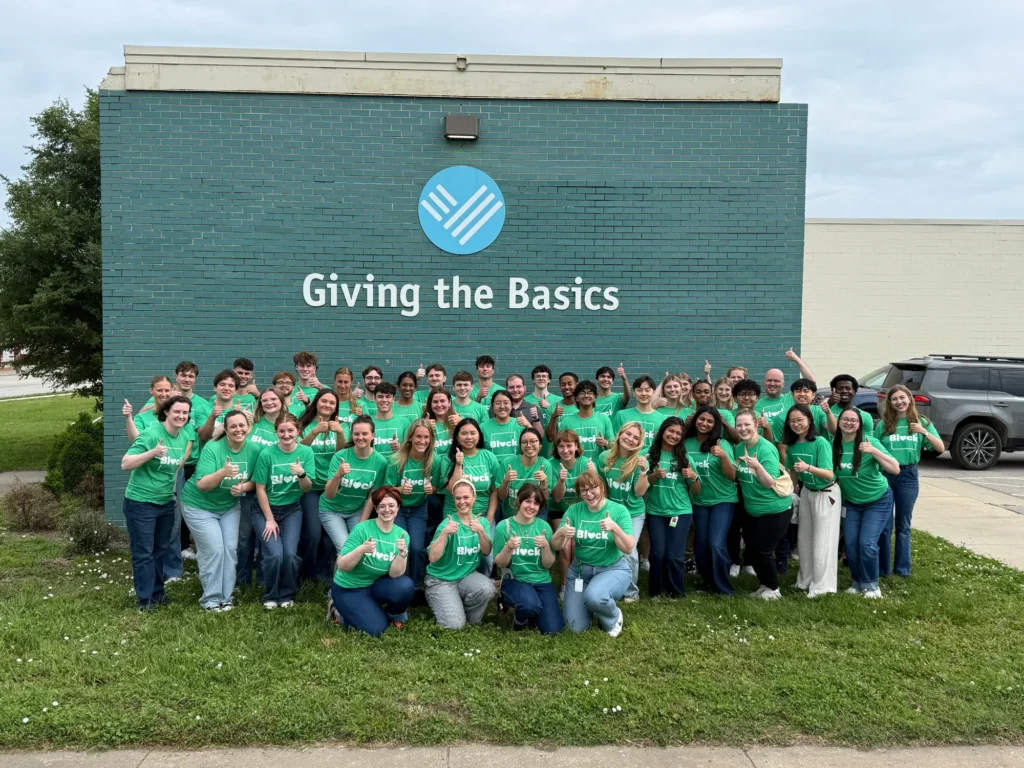
Blue KC Volunteering

Blue KC Volunteers

One volunteer from Blue KC reflected on their experience:

“I really like this organization. The world needs more places like this. It was great working with my team, and the provided music was a HUGE plus. Thanks so much for the opportunity.”

Volunteer shifts are intentionally designed so that teams can see the direct results of their efforts. In just a few hours, a group can help prepare thousands of products that will soon be distributed through our network of partner agencies.

There is something powerful about watching coworkers work side by side toward a common goal and knowing that every box completed will ultimately support someone in need.

More Than a Volunteer Shift

Many volunteers tell us they are surprised by how much can be accomplished in a relatively short amount of time.

What may begin as a corporate volunteer day often becomes an eye-opening experience that leaves a lasting impression long after the shift has ended.

A Blue KC volunteer shared:

“I love the mission and the dedication behind it. The friendly and helpful staff. The process was amazing. So much can be accomplished in a relatively short span of time. Also, the number of donated materials demonstrating the kindness of others. Truly a rewarding experience.”

Comments like these remind us that volunteering is about more than completing a task. It is about connecting with a mission, understanding a community need, and becoming part of a larger movement dedicated to helping others.

Every product sorted and packaged represents generosity from donors, dedication from volunteers, and hope for the individuals who will eventually receive those items.

The Power of Hygiene

Perhaps the most moving moments in our volunteer sessions occur when someone shares a personal connection to the mission.

Propio Language Services Volunteers

For one volunteer from Propio, the importance of hygiene products was not theoretical—it was deeply personal.

“I spent two years doing archaeology and living out of my car. The feeling of actually being able to take a shower and feel clean is so powerful.”

Their words capture something that statistics alone cannot.

Access to hygiene products affects how people feel about themselves. It impacts confidence when applying for a job, comfort while attending school, and the ability to participate fully in everyday life. Something as simple as a bar of soap or a tube of toothpaste can help restore dignity during difficult circumstances.

At Giving the Basics, we believe everyone deserves access to these essentials. Our volunteers help make that belief a reality every day.

Looking Ahead

As we reflect on the impact made throughout May, we are filled with gratitude for every individual and organization that chose to spend time serving alongside us.

The efforts of 287 volunteers resulted in 236,889 hygiene products being prepared for distribution. Those products will reach people facing challenges we may never fully see, but whose lives will be made a little easier because someone chose to show up and help.

Whether they came as part of a corporate volunteer team, a community organization, or as individuals looking to give back, each volunteer played an important role in strengthening our community.

Together, they demonstrated that addressing hygiene insecurity is not the responsibility of one organization alone. It takes businesses, community groups, donors, volunteers, and advocates all working together to ensure that everyone has access to the necessities they need to thrive.

To every volunteer who joined us in May: thank you for helping transform everyday products into opportunities for dignity, confidence, and hope.

For many volunteers, seeing the scale of need firsthand creates a deeper understanding of why hygiene products matter. Unlike food assistance programs, hygiene items are often not covered by government assistance programs, leaving many families to choose between essentials.

Corporate volunteering allows teams to step away from their desks and make a tangible difference together. Volunteers consistently tell us that the experience is both meaningful and rewarding.

TELUS Volunteers
TELUS Volunteers

Hallmark Volunteers
Hallmark Volunteers

KC Marriott Business Council Volunteers

ARR Architecture Volunteers
BRR Architecture Volunteers

NFM Volunteers
NFM Volunteers

Children’s Mercy Volunteers

Symplr Volunteers
symplr Volunteers

symplr Volunteers
KPMG Volunteers

Mariner Volunteers
Mariner Volunteers

Stella Maris Volunteers

The Difference Between a Hygiene Bank and a Food Pantry

Hygiene Bank versus Food Bank

When most people think about poverty relief, they think about food banks and food pantries. While food assistance organizations play a critical role in fighting hunger, there is another basic need affecting millions of Americans every day that often goes overlooked: hygiene products.

That’s where a hygiene bank comes in.

At Giving the Basics, we often hear people ask, “Is a hygiene bank the same thing as a food pantry?” The short answer is no. While both organizations help individuals and families experiencing hardship, a hygiene bank focuses specifically on providing essential hygiene products that government assistance programs do not cover.

Understanding the difference between a hygiene bank and a food pantry is essential to understanding the hidden crisis of hygiene poverty in America.

What Is a Hygiene Bank?

A hygiene bank is an organization dedicated to collecting, distributing, and providing personal hygiene and household cleaning products to people in need.

Unlike food pantries, which primarily distribute food, a hygiene bank supplies essentials such as:

  • Soap
  • Shampoo
  • Toothpaste
  • Toothbrushes
  • Deodorant
  • Feminine hygiene products
  • Toilet paper
  • Diapers
  • Laundry detergent
  • Dish soap
  • Cleaning supplies

These are products most people use every day without thinking twice. Yet for millions of families, these essentials are financially out of reach.

At Giving the Basics, we call this issue hygiene poverty — the inability to afford basic hygiene products necessary for health, dignity, work, and school participation.

As America’s Hygiene Hub, Giving the Basics has distributed more than 36 million hygiene products to over 3.6 million people through a network of schools, nonprofits, senior centers, veterans organizations, shelters, and community agencies.

What Is a Food Pantry?

A food pantry is a community-based organization that distributes groceries and food items to individuals and families experiencing food insecurity.

Food pantries help address hunger by providing:

  • Shelf-stable foods
  • Fresh produce
  • Frozen foods
  • Canned goods
  • Dairy products
  • Meat
  • Bread and grains

Food pantries are a vital part of the hunger relief network in the United States. Many work alongside food banks, which store and distribute large quantities of food to local agencies.

Because hunger is a visible and widely discussed issue, food assistance programs have developed strong national support systems. Government programs like SNAP (Supplemental Nutrition Assistance Program) exist specifically to help families purchase food.

But hygiene products fall into a completely different category.

The Biggest Difference Between a Hygiene Bank and a Food Pantry

The most important difference between a hygiene bank and a food pantry is this:

Food assistance programs exist. Hygiene assistance programs largely do not.

Federal programs like SNAP and WIC cannot be used to purchase hygiene items like soap, deodorant, toothpaste, toilet paper, diapers, or laundry detergent.

That means families already struggling to afford food, housing, transportation, and healthcare must also find room in their budget for hygiene essentials.

For many households, that simply isn’t possible.

According to research highlighted by Giving the Basics:

  • One in three low-income families struggles to afford basic household necessities, including hygiene products.
  • Thirty-three percent of low-income households report bathing without soap when they cannot afford hygiene supplies.
  • Nearly three-quarters of families experiencing hygiene insecurity skip laundry or dishwashing to conserve products.

This is why hygiene banks are so important.

A hygiene bank fills the gap left behind by traditional assistance systems.

Why Hygiene Products Matter

Some people mistakenly view hygiene products as “extras” instead of necessities. But hygiene impacts nearly every part of daily life.

Without access to hygiene products:

  • Students may miss school
  • Adults may struggle to maintain employment
  • Families may experience increased health issues
  • Children may face bullying or embarrassment
  • Seniors may lose dignity and independence

Research shows hygiene insecurity directly affects educational outcomes and workforce participation.

Imagine trying to attend a job interview without deodorant, wash your clothes without detergent, or go to school without toothpaste or menstrual products.

For millions of Americans, this is not hypothetical.

Hygiene products help people show up confidently at school, work, medical appointments, and in their communities.

At Giving the Basics, we believe hygiene is not a luxury. It is a basic human need.

Why Food Pantries Often Cannot Meet Hygiene Needs

Many people assume food pantries already provide hygiene products. While some food pantries distribute limited toiletries when donations are available, most are not equipped to consistently supply hygiene essentials.

There are several reasons for this:

Hygiene products are expensive

Unlike canned food drives, hygiene drives are less common and often generate fewer donations.

There is no government reimbursement

Food programs often receive federal support. Hygiene programs generally do not.

Demand is extremely high

Products like deodorant, diapers, toothpaste, and toilet paper are consistently among the most requested items at community agencies.

Hygiene products are harder to source

Because they are not perishable, hygiene items are not donated through traditional food supply chains at the same volume as food products.

This is why dedicated hygiene banks like Giving the Basics are essential.

How Giving the Basics Is Different

Giving the Basics is not simply a food pantry with toiletries.

Giving the Basics is a hygiene bank dedicated exclusively to hygiene insecurity and hygiene poverty.

Through partnerships with schools, nonprofits, veterans programs, law enforcement agencies, senior centers, foster organizations, shelters, and social service agencies, Giving the Basics distributes hygiene products where they are needed most.

This specialized approach allows Giving the Basics to:

  • Source large-scale hygiene donations
  • Purchase products in bulk
  • Build efficient distribution systems
  • Respond quickly to community needs
  • Focus entirely on hygiene insecurity

The organization serves thousands of people every month with products many families cannot otherwise afford.

And because hygiene poverty often remains hidden, Giving the Basics also works to educate communities about the importance of hygiene access.

The Growing Need for Hygiene Banks

The need for hygiene banks continues to grow nationwide.

According to the U.S. Census Bureau, more than 35 million Americans live below the federal poverty line.

At the same time:

  • Inflation continues to increase household expenses
  • Hygiene product costs continue to rise
  • Many working families still live paycheck to paycheck

When budgets become tight, hygiene products are often among the first items sacrificed.

Families dilute soap with water, reuse diapers, skip laundry, or go without essential products entirely.

This growing reality has increased awareness around the importance of hygiene banks and organizations like Giving the Basics.

How You Can Help a Hygiene Bank

Hygiene poverty is solvable — but only when communities come together.

You can support Giving the Basics and help expand access to essential hygiene products by:

Even a small donation can help provide soap, toothpaste, deodorant, diapers, and other essentials to individuals and families facing hardship.

Every product distributed represents more than hygiene. It represents dignity, confidence, health, and hope.

Get Involved with Giving the Basics

At Giving the Basics, we believe no one should have to choose between buying food and buying soap.

Food pantries play an important role in fighting hunger. But hygiene banks fill another critical gap — helping families access the everyday essentials that allow them to live with dignity.

As America’s Hygiene Hub, Giving the Basics is leading the movement to end hygiene poverty and expand access to basic hygiene products for all.

How Corporate Volunteering Boosts Local Economies

Corporate Volunteering

Corporate volunteering has evolved far beyond occasional team-building activities. Today, businesses across the country are investing in Corporate Social Responsibility (CSR) initiatives that create measurable impact for employees, nonprofits, and entire communities.

From employee volunteer days to long-term nonprofit partnerships, corporate volunteering has become a powerful way for companies to strengthen workplace culture while helping address critical community needs.

But the impact goes even deeper than many organizations realize.

Corporate volunteering doesn’t just help nonprofits — it helps boost local economies.

At Giving the Basics, we see firsthand how corporate volunteer programs create ripple effects throughout communities by increasing nonprofit capacity, supporting workforce stability, and helping families access essential hygiene products they otherwise could not afford.

What Is Corporate Volunteering?

Corporate volunteering refers to company-sponsored volunteer opportunities that encourage employees to give back to their communities through organized service activities.

These programs can include:

  • Team volunteer events
  • Warehouse service projects
  • Skills-based volunteering
  • Donation drives
  • Community partnerships
  • Employee volunteer days

Corporate volunteering is often part of a larger Corporate Social Responsibility (CSR) strategy designed to improve community impact while increasing employee engagement and company culture.

According to Deloitte, purpose-driven workplaces with strong CSR initiatives are more likely to attract and retain employees, particularly among younger generations entering the workforce. Companies that invest in volunteerism often see improvements in morale, collaboration, and employee satisfaction.

But beyond workplace benefits, corporate volunteering creates meaningful economic impact at the local level.

How Corporate Volunteering Supports Local Economies

When companies volunteer with nonprofit organizations, they help strengthen the systems that support families, schools, veterans, seniors, and individuals facing hardship.

At Giving the Basics, corporate volunteer groups directly help distribute essential hygiene products to community partners serving people experiencing hygiene insecurity.

That support allows nonprofits to operate more efficiently, stretch resources further, and reach more people in need.

Increased Nonprofit Capacity

One of the biggest ways corporate volunteering boosts local economies is by increasing nonprofit operational capacity.

Nonprofits often operate with limited staffing and tight budgets. Volunteer labor helps organizations accomplish critical work that would otherwise require additional paid staffing or reduced services.

In 2026 alone, Giving the Basics has hosted:

  • 120 corporate and community volunteer groups
  • More than 2,200 volunteers
  • Volunteers who packed more than 1 million hygiene items
  • An estimated $142,000 saved in labor costs

Those savings allow Giving the Basics to invest more resources directly into hygiene products and community distribution efforts instead of operational overhead.

Corporate volunteers become an extension of the nonprofit workforce, helping essential resources move faster and more efficiently into the community.

Corporate Volunteering Helps People Stay in the Workforce

Many people do not immediately connect hygiene access to economic stability, but the connection is significant.

At Giving the Basics, we focus on addressing hygiene poverty — the inability to afford basic hygiene products like soap, shampoo, deodorant, toothpaste, laundry detergent, and feminine hygiene items.

These products are essential for:

  • Attending school
  • Maintaining employment
  • Participating in daily life
  • Supporting physical and mental health

Unlike food assistance programs, federal benefits such as SNAP and WIC cannot be used to purchase hygiene products.

That means families already struggling with housing, transportation, food, and healthcare costs must also cover everyday hygiene essentials out of pocket.

When those products become unaffordable, the impact reaches far beyond the home.

Students may miss school. Adults may struggle to attend work confidently. Families may delay laundry, ration soap, or go without necessary products entirely.

Corporate volunteers at Giving the Basics directly help address these barriers by helping distribute hygiene products to local schools, shelters, veterans organizations, senior centers, and community agencies.

In doing so, corporate volunteerism supports workforce participation and educational stability — both critical components of healthy local economies.

Corporate Volunteering Strengthens Community Partnerships

Strong local economies rely on strong community networks.

Corporate volunteer programs create partnerships between businesses and nonprofits that help communities become more connected, resilient, and responsive to local needs.

When companies volunteer with organizations like Giving the Basics, they:

  • Build relationships with community agencies
  • Increase awareness of local challenges
  • Encourage additional giving and sponsorships
  • Create long-term community investment

These partnerships often grow beyond a single volunteer day.

Many companies that begin volunteering with Giving the Basics later host hygiene drives, sponsor product donations, or establish recurring service opportunities for employees.

This ongoing investment creates sustainable community impact while strengthening the nonprofit ecosystem serving the region.

Corporate Volunteering Improves Employee Engagement

One of the most recognized benefits of Corporate Social Responsibility programs is improved employee engagement.

Employees increasingly want to work for organizations that prioritize community impact and social responsibility.

According to research from PwC and Deloitte:

  • Employees are more likely to stay with companies that demonstrate purpose and community engagement
  • Younger generations strongly value workplace volunteer opportunities
  • Volunteer programs improve morale and team connection

Corporate volunteering creates opportunities for employees to:

  • Work collaboratively outside traditional job roles
  • Build stronger interpersonal relationships
  • Develop leadership skills
  • Feel personally connected to community impact

At Giving the Basics, volunteer groups often leave with a stronger understanding of hygiene insecurity and the importance of access to basic necessities.

Employees are able to see the direct impact of their work in real time — whether they are packing hygiene kits, sorting products, or preparing shipments for schools and community partners.

That hands-on experience creates meaningful engagement that extends beyond the workplace.

Why CSR Matters More Than Ever

Corporate Social Responsibility is no longer viewed as optional.

Consumers, employees, and communities increasingly expect businesses to play an active role in addressing social challenges.

At the same time, nonprofits are facing rising demand due to:

  • Inflation
  • Increasing household costs
  • Growing economic instability
  • Increased hygiene insecurity

Organizations like Giving the Basics are working to meet these growing needs every day.

Corporate volunteers help make that possible.

Volunteer support allows nonprofits to:

  • Serve more families
  • Reduce operational costs
  • Expand distribution efforts
  • Increase community awareness
  • Build stronger local support systems

The impact extends well beyond the walls of the nonprofit organization.

When families have access to basic hygiene products, communities become healthier, students are better prepared for school, and individuals are better equipped to participate in the workforce.

That creates positive economic effects for the entire region.

Why Companies Partner with Giving the Basics

Giving the Basics provides a unique volunteer experience that combines hands-on service with measurable community impact.

Corporate teams do more than volunteer for a few hours — they directly help distribute essential hygiene products to people throughout the community.

Volunteer opportunities may include:

  • Packing hygiene boxes
  • Sorting donated products
  • Preparing shipments for community partners
  • Supporting large-scale product distribution

Because hygiene products are rarely covered by government assistance programs, every volunteer shift helps close a critical gap for families experiencing hardship.

In 2026 alone, corporate volunteers have already helped Giving the Basics distribute nearly 6 million hygiene items throughout the community.

That work supports children, veterans, seniors, individuals experiencing homelessness, and families facing financial hardship.

For companies looking to strengthen their Corporate Social Responsibility initiatives, Giving the Basics offers an opportunity to create tangible, local impact while engaging employees in meaningful service.

Get Involved Through Corporate Volunteering

Corporate volunteering has the power to strengthen workplaces, nonprofits, and entire communities.

When businesses invest in CSR and employee volunteer programs, they help build healthier, more resilient local economies while addressing real community needs.

At Giving the Basics, corporate volunteers play a critical role in helping provide hygiene products to individuals and families experiencing hygiene insecurity.

Whether through volunteer shifts, hygiene drives, sponsorships, or long-term partnerships, companies can make a direct impact on the lives of people throughout the region.

Learn more about corporate volunteering opportunities and how your company can get involved.

How Bulk Hygiene Donations Save Nonprofits Thousands

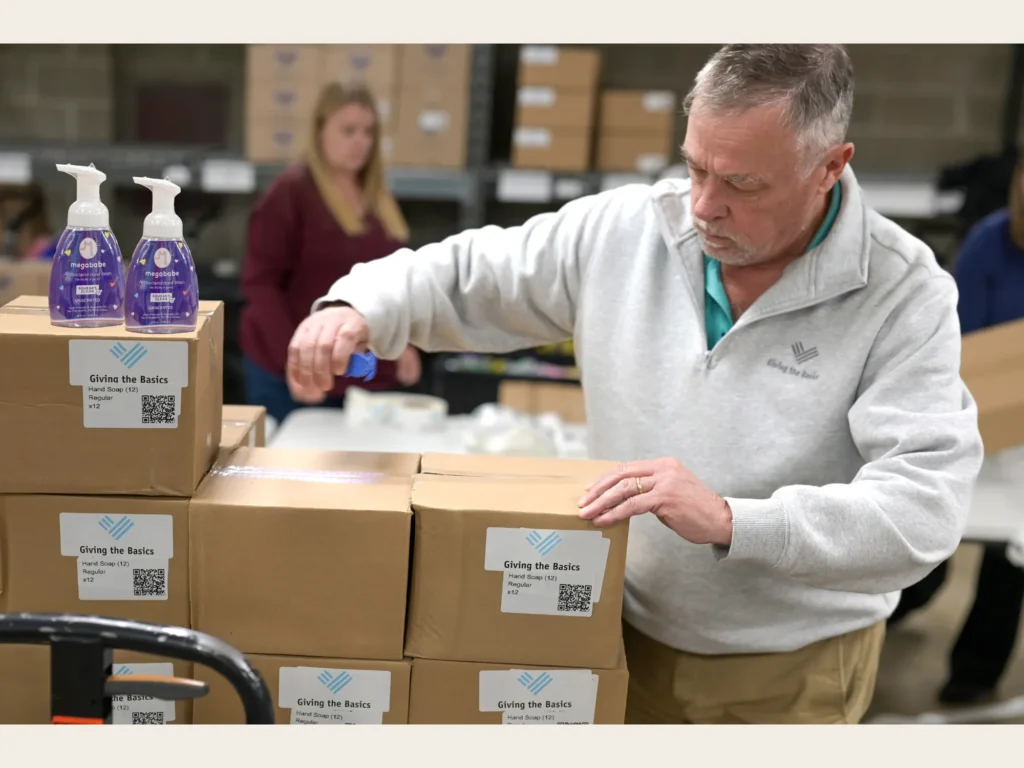
Bulk Hygiene Product Donations

How Bulk Hygiene Donations Save Nonprofits Thousands

For nonprofits, especially hygiene banks working to meet basic needs, every dollar matters. At the same time, demand for hygiene products like shampoo, deodorant, soap, and feminine care items continues to rise in schools, shelters, and community programs.

That’s where bulk hygiene donations become transformational.

For organizations like Giving the Basics, bulk product partnerships are not just helpful — they are foundational to how we operate. They allow us to stretch every donated dollar further, reach more people, and ensure dignity is accessible to those who need it most.

The True Cost of Hygiene Poverty

Hygiene products are often overlooked in traditional assistance programs, yet they are essential for health, confidence, attendance at school and work, and overall well-being.

When nonprofits have to purchase every product they distribute, the cost adds up quickly. Even basic hygiene items like soap can become expensive at scale.

That’s why bulk donations from corporate partners play such a critical role: they eliminate major procurement costs and allow organizations to focus resources on distribution, outreach, and impact.

Why Companies Choose to Donate in Bulk

For product-based companies, bulk donation is not just philanthropy — it is also a smart operational decision.

One of our partners, MegaBabe Beauty, shared how bulk donation aligns with their mission and business reality:

“Megababe is built on the idea that feeling comfortable in your body shouldn’t be a luxury. Bulk donation is one of the most direct ways we can live that out beyond the shelf.”

Many companies face periodic excess inventory due to:

  • Packaging updates
  • Formula or product changes
  • Overproduction

Rather than letting usable product sit in storage or go to waste, bulk donation allows companies to redirect that inventory toward meaningful community impact.

As MegaBabe explained:

“Bulk donations allow us to put that product to real use instead of letting it collect dust in a warehouse or, worse, go to a landfill.”

This approach not only reduces waste — it turns a logistical challenge into measurable social impact.

Why Distribution Partners Matter

Bulk donation only works when there is a trusted system to move products into communities efficiently.

MegaBabe emphasized this clearly:

“A reliable distribution partner means we can give with confidence that the product is handled properly, is reaching the right communities, and making a real impact.”

This is where infrastructure matters.

At Giving the Basics, donated products are:

  • Received through established in-kind partnerships
  • Sorted and organized by volunteers
  • Packaged into quantities for distribution
  • Picked up or shipped directly to schools, shelters, and community partners

This system ensures donated goods move quickly and efficiently from warehouse to the people who need them most.

Turning Product Donations into Greater Impact

Bulk donations don’t just reduce costs — they multiply impact.

Because of generous in-kind partners, Giving the Basics is able to:

  • Distribute $3 in products for every $1 donated
  • Receive large scale shipments of product, more than 5 million hygiene products from partners so far this year
  • Rely on volunteers to sort and package donations, saving hundreds of thousands of dollars annually in operational costs

Every donated product represents:

  • One less item that must be purchased
  • Moments of dignity and hope for the person served

The Human Impact Behind Every Donation

While bulk donation is efficient from an operational standpoint, its greatest value is human.

MegaBabe shared:

“Our team pours a lot of care into these products, and knowing they’re reaching people who might not otherwise have access to them is more meaningful than any sales number.”

That sentiment reflects what we see every day.

A bottle of shampoo or stick of deodorant may seem small, but for a student or parent facing financial strain, it can mean:

  • Feeling confident at school or work
  • Reduced stress in daily life
  • A sense of dignity and normalcy

What Companies Look for in Donation Partnerships

Effective bulk donation programs require more than just excess inventory — they require alignment.

MegaBabe shared the key considerations they evaluate:

  • Product quality and usability
  • Credibility and reach of the receiving organization
  • Strong distribution infrastructure
  • Confidence that donation will create real impact

As they put it:

“We’d rather do it right than just do it fast.”

That mindset is what makes partnerships sustainable and impactful long-term.

Why Bulk Donation Works

In a single sentence, MegaBabe captured the heart of it:

“Because Megababe believes everyone deserves to feel good in their body, and donation is one of the ways we try to make our products as accessible as possible.”

For nonprofits like Giving the Basics, that accessibility is what turns corporate generosity into community impact at scale.

Final Thought

Bulk hygiene donations are more than supply chain efficiency — they are a powerful bridge between corporate surplus and human need.

They reduce waste, lower nonprofit costs, and most importantly, ensure that essential hygiene products reach the people who need them most.

When companies and nonprofits align around dignity, the impact multiplies far beyond what either could achieve alone.

Partner With Us

If your company is interested in learning more about how bulk hygiene donations can create meaningful community impact—or exploring a partnership with Giving the Basics—we’d love to connect.

To learn more or start a bulk donation partnership, visit:

https://givingthebasics.org/product-donations/

Spring Showers Drive 2026 – 445,000 Reasons to Celebrate

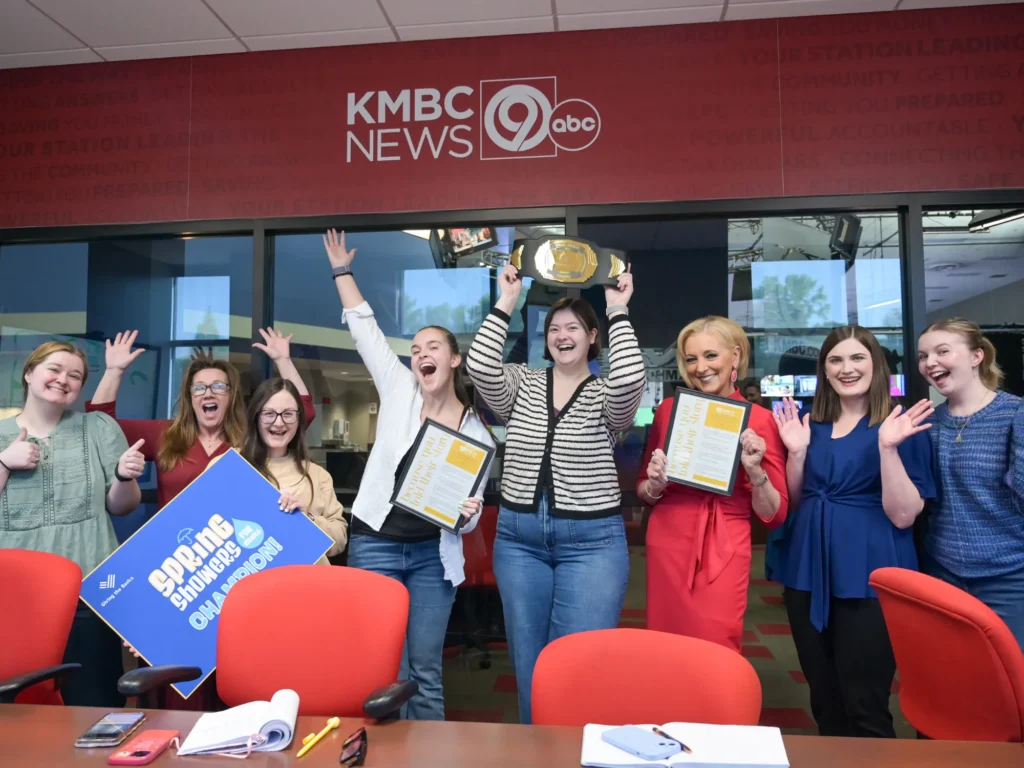
KMBC 9 Spring Showers

Spring Showers 2026: 445,000 Reasons to Celebrate

What started as a community call to support local students became something truly extraordinary. Thanks to the generosity of hundreds of individuals, businesses, schools, faith communities, and partners across the region, Spring Showers 2026 collected an incredible 445,400 hygiene items for students experiencing hygiene insecurity.

From shampoo and soap to deodorant, toothpaste, and period products, every donated item represents more than just a basic necessity — it represents confidence, dignity, and the ability for students to show up ready to learn.

This year’s campaign once again proved what is possible when a community rallies together for a common purpose.

Friendly Competition, Incredible Impact

One of the most exciting parts of Spring Showers each year is the competition between participating organizations. Businesses and community groups across the metro challenged employees, customers, and supporters to give generously, creating energy and momentum throughout the campaign.

The division competitions inspired creativity, teamwork, and a shared sense of purpose as organizations worked to collect the most-needed hygiene products for local students. From office collection bins to customer donation drives and volunteer events, participants found countless ways to engage their communities.

Oasis Senior Advisors Spring Showers Drive

Division I Winner, Oasis Senior Advisors

1248 Holdings Spring Showers Drive

Division II Winner, 1248 Holdings

BPU Employee Foundation Spring Showers Drive

Division III Winner, BPU

Guest Worldwide In Kind Donation Winner

In Kind Donation Winner, Guest Worldwide

Congratulations to all of our division winners and every organization that participated. Your leadership helped make this our biggest Spring Showers campaign yet.

Community Awareness That Made a Difference

A campaign of this scale is only possible when the community understands the need — and this year, awareness reached new heights thanks to incredible media and promotional support.

KMBC 9 News played a major role in amplifying the message of hygiene insecurity and encouraging viewers to take action throughout the campaign. Their coverage helped shine a light on the reality that many students miss school or struggle to focus simply because they do not have access to basic hygiene products at home.

One of the campaign segments can be viewed here:

KMBC 9 Video

The campaign also received incredible support from Life 88.5, whose on-air promotion and encouragement motivated listeners to donate and get involved. Their passion for serving the community helped bring even more attention and support to Spring Showers this year.

Life 88 Kansas City

Thank You to Our Sponsors

Spring Showers 2026 would not have been possible without the support of our generous sponsors, whose partnership helped expand the campaign’s reach and impact.

T-Mobile Foundation Donation

A special thank you to:

Their commitment to supporting students and families helped fuel this year’s success and ensured more hygiene products could reach the people who need them most.

Looking Ahead to 2027

While we are celebrating this incredible milestone, the need continues year-round. Thousands of students in our community still lack access to the everyday hygiene products many of us take for granted.

That is why Spring Showers will return in 2027 — bigger, stronger, and ready to continue building dignity for local students and families.

To every person who donated a toothbrush, hosted a drive, shared a post, volunteered their time, sponsored the campaign, or helped spread the word: thank you. Your generosity created 445,000 moments of dignity and care for students across our community.

Together, we are proving that small acts of kindness can create a massive impact.

Digital Promotion Strategies for Your Next Hygiene Drive

Hygiene Drive Promotion Tips

Digital Promotion Strategies for Your Next Hygiene Drive

Hygiene drives are a powerful way to make a tangible difference in your community. Whether you call it a hygiene drive, dignity drive, or personal care collection, these initiatives address a critical but often overlooked need: access to basic hygiene products that help students feel confident, clean, and ready to learn.

Who Can Host a Hygiene Drive?

Almost anyone! Schools, businesses, churches, civic groups, neighborhood associations, scout troops, and corporate teams can all host successful hygiene drives.

  • Schools and PTAs can organize student-led collections.
  • Companies and employee resource groups can run workplace drives as part of community outreach or employee engagement programs.
  • Faith-based organizations and nonprofits can rally congregations or members.
  • Families and individuals can start small online or neighborhood collections.

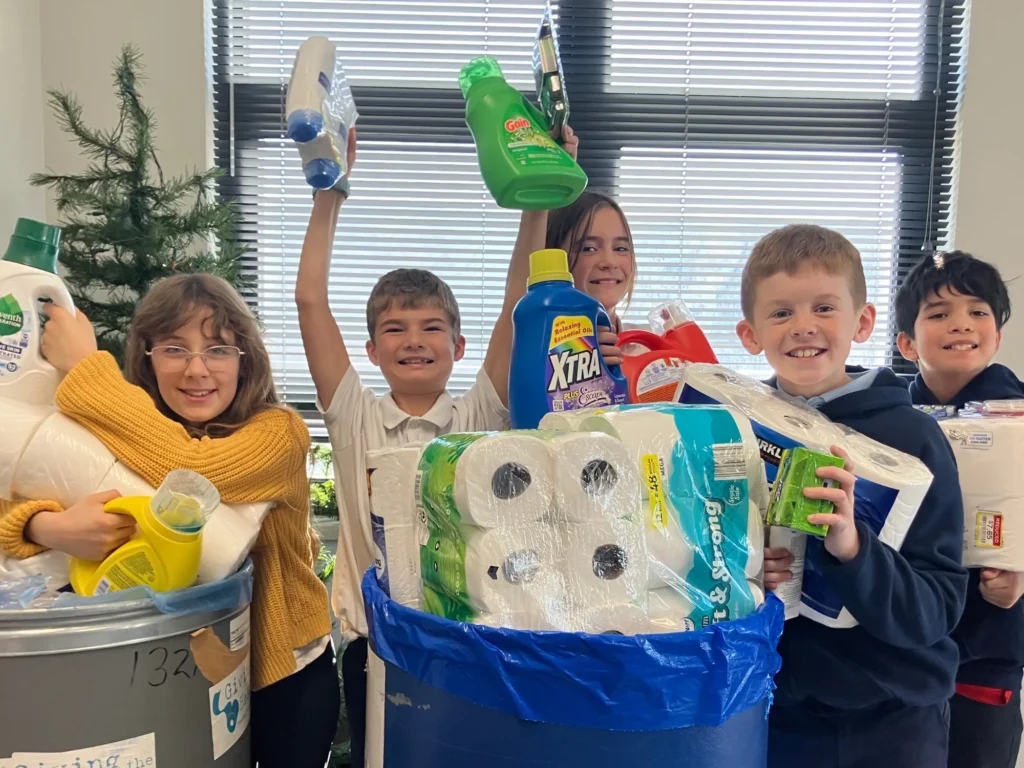
The beauty of a hygiene drive is its flexibility — you can host a physical collection with barrels or bins, run a fully virtual/amazon wishlist drive, or combine both for maximum impact.

The Benefits and Real Impact of Hosting a Hygiene Drive

Hosting a hygiene drive does more than collect items — it restores dignity and removes barriers to education. Many students miss school or feel embarrassed due to lack of basic hygiene products like shampoo, deodorant, toothpaste, or feminine hygiene items.

As one Piper Middle School student shared:

“There were times I didn’t have what I needed, and it was embarrassing to ask for help. But thanks to Giving the Basics, I could get things like shampoo, deodorant, and even tampons without feeling ashamed. It made me feel more confident and comfortable at school. I’m really grateful for the support.”

By participating, your group directly helps thousands of local students. You’ll strengthen team spirit, fulfill corporate social responsibility goals, engage employees or students in meaningful service, and create positive visibility for your organization.

How Our Staff Supports Your Hygiene Drive

Hygiene Drive Promotion Tips

When you partner with Giving the Basics, you’re never on your own. Our team provides full logistical and promotional support:

  • Barrel Drop-Off & Pickup Coordination: We deliver collection barrels or bins to your location and handle pickup once your drive ends. This makes physical collections hassle-free.
  • Digital Toolkit: We provide a complete set of ready-to-use promotional materials, including:
    • Logos and branded images
    • Email templates
    • Social media graphics and templates
    • Flyers
    • Drive count sheets to track progress

These resources make it easy to promote your drive across digital channels and keep everyone excited and informed.

Digital Promotion Strategies to Maximize Your Hygiene Drive

Leverage the digital toolkit to amplify your reach and participation:

  1. Social Media Campaign Use the provided social templates to create a series of posts. Share the student testimonial, highlight most-needed items including shampoo, conditioner, deodorant, lotion, feminine hygiene, laundry detergent, toilet paper, and toothpaste, and post progress updates with photos of your barrel or collection totals. Create a branded hashtag and encourage participants to share their donations.
  2. Email Outreach Send the ready-made email templates to employees, parents, members, or your network. Include a clear call-to-action with your drive dates, drop-off locations, and wishlist links for virtual donations.
  3. Internal Challenges & Incentives Make it fun! Set up team or department challenges, celebrate milestones, and offer small incentives as suggested in the toolkit. Share weekly progress updates to maintain momentum.
  4. Visual Content Use the toolkit’s images and flyers for eye-catching graphics. Post photos of collection barrels filling up, or create simple videos explaining why hygiene items matter.
  5. Multi-Channel Promotion Combine physical barrels at high-traffic areas with strong online promotion. Add a virtual component via an online registry so remote supporters can participate.

Ready to Host Your Hygiene Drive?

Hosting a hygiene drive is one of the most meaningful and straightforward ways to give back. With staff support for logistics and a complete digital toolkit at your fingertips, your next drive can be highly successful and low-stress.

Sign up today to host a physical drive, online drive, or both. Our team will coordinate barrel drop-off and equip you with everything you need to promote effectively.

Together, we can ensure no student has to feel embarrassed or unsupported due to missing basic hygiene essentials. Start planning your hygiene drive today — the impact will last far beyond the collection period.

Click Here to get started and receive your Digital Toolkit.

Volunteer Spotlight May 2026

Giving the Basics Volunteer Spotlight

Volunteer Spotlight Series: Meet the People Behind the Mission

Volunteering with Giving the Basics is more than just packing boxes — it’s about restoring dignity, one toothbrush, one bar of soap, and one confident smile at a time. Every volunteer who walks through our warehouse doors becomes part of a powerful movement fighting hygiene poverty in the Kansas City community.

In this Volunteer Spotlight, we’re excited to introduce you to two incredible corporate volunteer leaders who have become true champions of our mission.

Laura Reed – Volunteer Coordinator, Blue Cross and Blue Shield of Kansas City

Laura Reed

Laura first discovered Giving the Basics through her role managing employee volunteering at Blue KC. She came out for that very first shift and “fell in love with the mission and the vision.”

“You come in, you’re greeted, and you watch this wonderful video that really highlights the work they do in the community and how beneficial it is. Some of these things that you would think everybody has access to — you really get to know that it is hard for some people to have a toothbrush and toothpaste, to brush their teeth and wash their bodies.”

Laura especially appreciates the full experience: the impactful orientation video, the warehouse tour, hands-on packing with teammates, writing personal notes, and seeing the exact impact numbers at the end of every shift.

When asked what she would write in one of those recipient notes, Laura shared:

“You’re not alone. You’ve got this. Just because you may not have access to everything someone right next to you has doesn’t mean you’re any less capable of achieving great things.”

She emphasizes how something as basic as hygiene products builds confidence for kids heading to school and adults working to rebuild their lives:

“Giving the Basics really helps start at ground zero with kids… You can show up to school with a little more self-confidence and be on the same page as other kids.”

If she had to choose one word to describe Giving the Basics, Laura says it’s simple: hope.

Seth Novero – Employee Volunteer Program Coordinator, Laminate Works

Seth Novero

Laminate Works is located just down the street from the Giving the Basics warehouse, making Giving the Basics a natural neighborhood partner. Seth helps run his company’s employee volunteer program and was introduced to us when a coworker spotted our sign.

“We’ve done a number of projects with about 30 different nonprofits in the area… Out of all the different volunteer projects we do, this has the largest turnout every time.”

Seth says two things drive that enthusiasm: proximity and the satisfaction of the work.

“It’s the close proximity, and it’s during working hours when most people can do it. But the projects are fun, we get to communicate and socialize together, and we’re very competitive… we compete with each other for bragging rights going back to work.”

What keeps bringing his team back is the meaningful impact they didn’t even know existed before:

“We’ve never heard of anything like it… This was the only one that covered a need we didn’t know existed. When we watch the video, we always leave feeling like, ‘Wow, we didn’t realize how people can struggle with this.’”

Seth connects deeply with the mission on a personal level:

“Dignity and self-worth… When you feel better about yourself, you put out more positive energy. Giving the Basics taps into that from a very tangible place. Everyone wants to feel loved and seen.”

He also reflects on his own childhood and his children:

“I was bullied… I know that feeling. Knowing that Giving the Basics addresses that issue… and imagining my own kids going through that breaks my heart. Programs like this mean a lot.”

The Real Impact of Volunteering

Volunteer Impact

Through April 2026, 99 volunteer groups like Blue KC and Laminate Works have come together to make an extraordinary difference:

  • 1,933 volunteers have served
  • 3,404 volunteer hours contributed
  • $118,408 in labor costs saved for the nonprofit
  • Over 1 million hygiene products processed and distributed to schools, food pantries, shelters, and community partners across the Kansas City area

These numbers represent real dignity restored — fewer children missing school because of hygiene issues, families regaining confidence, and hope delivered through the most basic of essentials.

Want to Join the Movement?

Whether you come as an individual, with your family, or as part of a company group, volunteering at Giving the Basics is designed to be meaningful, fun, and impactful. You’ll leave knowing exactly how many items you helped prepare and how many people in your community will benefit.

Ready to sign up?  Reserve your spot! We’d love to welcome you to the warehouse!

What 718 Volunteers Learned About Hygiene Poverty This Month

April 2026 Corporate Volunteers

This month, the warehouse at Giving the Basics was filled with more than boxes and hygiene products—it was filled with people showing up for students and families in a big way.

A total of 718 volunteers from 28 companies and groups came together to package 545,023 hygiene items that will help students walk into school feeling clean, confident, and ready to learn.

And for many volunteers, the experience became something more personal than they expected.

As teams packed shampoo, deodorant, soap, feminine hygiene products, and other essentials, they gained a firsthand understanding of how deeply hygiene poverty impacts everyday life.

The Need Became Real

For many volunteers, the scale of hygiene poverty was eye-opening.

One volunteer shared:

“I am blown away by how large the need for the basics is just in our KC community. Truly eye opening. You never know who is struggling, and that makes the work that Giving the Basics does so vital to our community.”

— Centralized Supply Chain Services Volunteer

Hygiene poverty often goes unseen, but its effects show up everywhere—in classrooms, workplaces, and homes across our community.

Something as simple as shampoo, deodorant, or feminine hygiene products can directly impact a student’s confidence, attendance, and ability to focus.

Volunteers Connected the Mission to Real Life

Many volunteers reflected on personal experiences that reminded them why access to hygiene matters.

One volunteer shared:

“I remember a boy in elementary school who was shunned because he didn’t have hot water and basic care necessities. I am so happy to have helped in the present.”

— NAIC Volunteer

Others were struck by how essential these products truly are.

“I likely would not be able to be a productive member of society. The basics are so essential, and you forget how some people do not have access to things. This is definitely a great cause.”

— New Dynamics Volunteer

These products do far more than support hygiene. They support dignity, confidence, belonging, and opportunity.

Supporting Students Through Spring Showers for Dignity

Several volunteer groups also stepped up beyond the warehouse this spring by participating in our Spring Showers for Dignity Drive, helping provide hygiene items directly to local students.

Thanks to the incredible generosity of businesses, teams, and community supporters, Spring Showers surpassed its goal and will provide 455,400 hygiene items for students.

Special thanks to groups including:

for helping fuel this effort and make dignity possible for thousands of students.

Small Products. Big Impact.

One volunteer from TreviPay reflected on the impact of period poverty specifically:

“It is crazy to believe women go without the necessary products for their time of the month… makes me wish there were more places to provide something so simple to them.”

That’s the reality many students and families face every day.

And it’s why volunteer support matters so much.

Every box packed this month represents a student who can focus more on learning and less on whether they have the basics they need.

Thank You to Our Volunteer Partners

We are incredibly grateful to all of this month’s volunteer groups and partners, including:

Nebraska Furniture Mart

Nebraska Furniture Mart

NorthPoint Development

NorthPoint Development

Ameristar Casino Hotel Kansas City

Ameristar Casino Hotel Kansas City

Harrah’s Kansas City

Harrah’s Kansas City

TreviPay

TreviPay

Creative Planning

Creative Planning

Laminate Works

Laminate Works

National Association of Insurance Commissioners (NAIC)

National Association of Insurance Commissioners (NAIC)

Centralized Supply Chain Services, LLC

Centralized Supply Chain Services, LLC

MEM

MEM

studioNorth Architecture

studioNorth Architecture

Hallmark Cards

Hallmark Cards

New Dynamics, LLC

New Dynamics, LLC

Blue Cross and Blue Shield of Kansas City

Blue Cross and Blue Shield of Kansas City

QTS Data Centers

QTS Data Centers

KMBC 9 News

KMBC 9 News

T-Mobile

T-Mobile

St. James Serve Day

St. James (Serve Day)

Fort Osage High School

Fort Osage High School

Ridgeview Elementary

Ridgeview Elementary

MSU Alumni Chapter

MSU Alumni Chapter

St. Michael’s

St. Michael’s

Junction Elementary Student Council

Junction Elementary Student Council

Lakeview Village

Lakeview Village

Country Club Bank, a division of FNBO

Because of you, thousands of students and families will have access to the basics they need to thrive.

Interested in volunteering with your team? We’d love to partner with you.

Volunteer with Giving the Basics

School Nurses Share the Power of Hygiene Access for Students

From Absences to Confidence

School Nurses Share the Power of Hygiene Access for Students

Every day across the region, school nurses quietly solve problems most people never see.

A student afraid classmates will think they have lice.

A child missing class because of an accident and no change of clothes.

A girl staying home during her period.

A family asking if shampoo can be sent home in a backpack.

These moments happen more often than people realize—and they reveal the hidden impact of hygiene poverty in schools.

That’s why access to hygiene for schools matters so deeply. Today, nearly 300,000 hygiene items are reaching students each month, helping school nurses and counselors support students not just academically—but personally, socially, and emotionally.

Here’s what they’re seeing firsthand.

Students Are Missing Fewer Classes

School Hygiene Access

One of the clearest changes school nurses report is improved attendance.

“Students feel more comfortable coming in asking for hygiene assistance. By having these products available for them, we have reduced the number of students leaving because of an ‘accident’ needing to go home to change—which used to result in missing classes.”

Research supports what nurses are seeing. Access to hygiene supplies and hand hygiene support in schools has been shown to reduce illness-related absences by as much as 51% in some school-based interventions.

And when students stay in school, they stay connected—to learning, friendships, and opportunity.

Students Are More Confident Asking for Help

School Hygiene Access

When hygiene products are consistently available, students stop feeling embarrassed about asking.

At Osawatomie USD 367, a nurse shared:

“A student was crying on arrival to school due to bad dandruff. They were out of shampoo at home and scared peers would think they had lice. We were able to help the student wash their hair in the sink and provide the supplies they were out of at home.”

Moments like this change how students experience school. Instead of anxiety, they feel relief. Instead of hiding, they participate.

Students Participate More Fully in School Activities

School Hygiene Access Sports

Access to hygiene items in schools doesn’t just affect attendance—it affects confidence.

School nurses report:

“There has been an increase in students’ participation in sports at recess due to them knowing they can get deodorant from the nurse’s office if they are worried about smelling after.”

They’re also seeing earlier and healthier hygiene habits develop:

“More 4th and 5th graders are using deodorant in general.”

And students are learning preventative care:

“Students were more proactive this winter about their dry skin. They were asking for lip balm and using it before their lips became so cracked and dry that they bleed.”

These small shifts create lasting habits that support both health and self-esteem.

Girls Are Missing Fewer Days During Their Periods

School Hygiene Access Girls

Across the country, nearly one in four teens who menstruate has struggled to afford period products.

That lack of access—known as period poverty—directly contributes to missed school days and lower engagement.

School nurses are seeing the difference access makes immediately.

At Burrton USD 369, staff shared:

“The girls are less likely to be gone during their cycle. They are more open about when they need things also.”

At Spring Hill Elementary USD 230:

“Girls have developed more confidence around coming into the nurse office for pads.”

When products are available without barriers, students stay in class—and feel supported while they’re there.

Families Are Receiving Support Beyond the Classroom

For many districts, hygiene kits for schools help support entire households—not just individual students.

From Jayhawk USD 346:

“We are able to wash students’ clothes that have been worn several days in a row and have a bad odor. I wash students’ clothes every day. Students have hygiene products they can take home and use.”

And families are increasingly reaching out directly for help.

At Burrton USD 369:

“At least a few times a month, families will reach out asking if I can put extra shampoo, soap, feminine hygiene products, toilet paper, or laundry soap in their child’s backpack for take home… it is SUCH a relief to have those items available.”

Access to these essentials reduces stress for caregivers and strengthens the relationship between families and schools.

Hygiene Products Help Prevent Escalating Concerns

Sometimes hygiene support prevents much larger problems.

A school social worker in Kearney explained:

“These hygiene items are key to prevention of hotline calls for concerns of neglect. When teachers express concern that a child is wearing dirty clothes or has poor hygiene, it has been a blessing to offer these products to remedy the concern and not have to get other agencies involved.”

Access to hygiene items at school allows educators to respond with support instead of escalation. That changes outcomes for students—and families.

Schools Are Supporting the Whole Child

At Osawatomie USD 367, staff described their approach this way:

“This program is such a help to our district which is in a low SES community. We provide these products to students and families without question on need. We believe in supporting our students beyond the bell to bell within the classroom. Our support extends beyond our school doors.”

That’s exactly what hygiene access makes possible.

When students feel clean, confident, and prepared, they are more likely to attend school regularly, participate fully, and focus on learning.

And when school nurses have the right tools, they can respond immediately—before small challenges become barriers to success.

Why Hygiene Items for Schools Matter More Than Ever

Hygiene poverty is often invisible—but its effects are not.

It shows up in missed class time.

In reduced confidence.

In families quietly asking for help.

And in students who just want to feel like they belong.

By delivering nearly 300,000 hygiene items to schools each month, communities are helping school nurses and counselors do what they do best: remove barriers so students can thrive.

Because sometimes the difference between missing school and succeeding in it is something as simple as shampoo, deodorant, or a clean shirt.

And sometimes dignity starts with hygiene.

Help Provide Hygiene to Schools

School Hygiene Product Drive

Right now, students across our region are walking into school worried about things they shouldn’t have to think about—whether they smell, whether they have shampoo at home, or whether they’ll have what they need during their period.

Access to hygiene items at school changes that.

Because of community support, nearly 300,000 hygiene items reach local students every month—but the need continues to grow as more school nurses and counselors request help for the students and families they serve.

You can be part of the solution.

Here are four ways to help:

Donate hygiene items

Collect shampoo, deodorant, soap, pads, and other essentials with your workplace, school, or community group.

Give online

Financial gifts help provide the most-requested products quickly and efficiently to school nurses supporting students right now.

Start a hygiene drive

Hosting a drive is one of the easiest ways to provide hygiene items for schools and make a direct local impact.

Get Your Company Involved

Giving the Basics offers several ways for companies to make an impact.

Because when students have what they need to feel clean and confident, they can focus on what matters most—learning.