When most people think about poverty relief, they think about food banks and food pantries. While food assistance organizations play a critical role in fighting hunger, there is another basic need affecting millions of Americans every day that often goes overlooked: hygiene products.
That’s where a hygiene bank comes in.
At Giving the Basics, we often hear people ask, “Is a hygiene bank the same thing as a food pantry?” The short answer is no. While both organizations help individuals and families experiencing hardship, a hygiene bank focuses specifically on providing essential hygiene products that government assistance programs do not cover.
Understanding the difference between a hygiene bank and a food pantry is essential to understanding the hidden crisis of hygiene poverty in America.
What Is a Hygiene Bank?
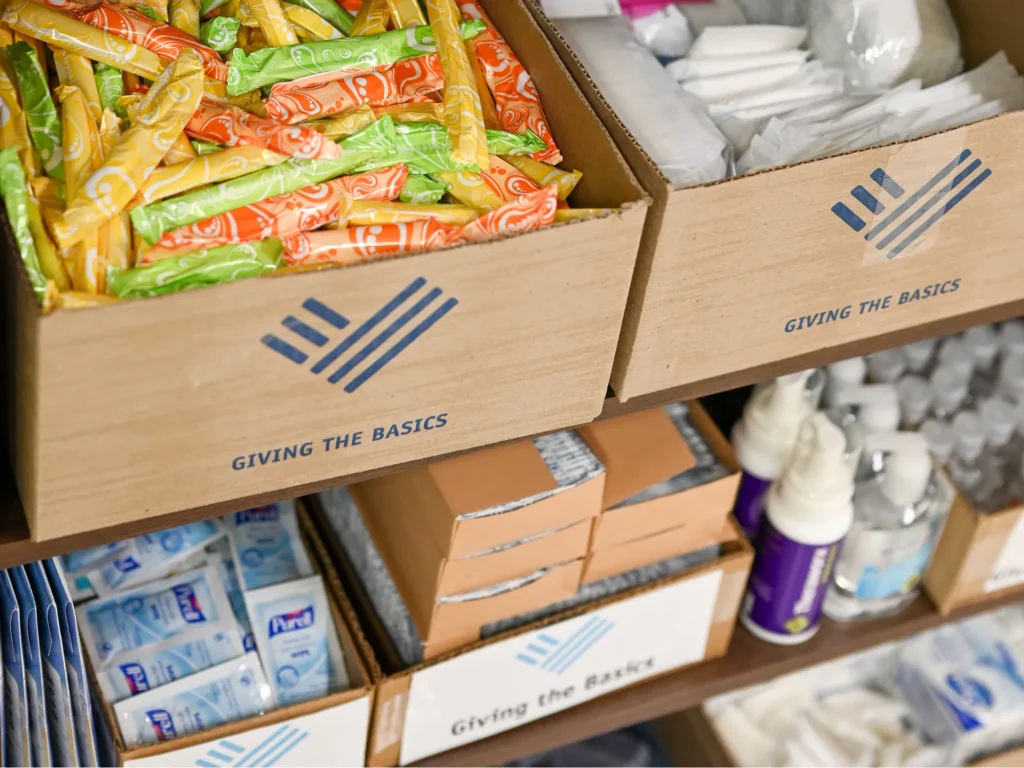
A hygiene bank is an organization dedicated to collecting, distributing, and providing personal hygiene and household cleaning products to people in need.
Unlike food pantries, which primarily distribute food, a hygiene bank supplies essentials such as:
- Soap
- Shampoo
- Toothpaste
- Toothbrushes
- Deodorant
- Feminine hygiene products
- Toilet paper
- Diapers
- Laundry detergent
- Dish soap
- Cleaning supplies
These are products most people use every day without thinking twice. Yet for millions of families, these essentials are financially out of reach.
At Giving the Basics, we call this issue hygiene poverty — the inability to afford basic hygiene products necessary for health, dignity, work, and school participation.
As America’s Hygiene Hub, Giving the Basics has distributed more than 36 million hygiene products to over 3.6 million people through a network of schools, nonprofits, senior centers, veterans organizations, shelters, and community agencies.
What Is a Food Pantry?
A food pantry is a community-based organization that distributes groceries and food items to individuals and families experiencing food insecurity.
Food pantries help address hunger by providing:
- Shelf-stable foods
- Fresh produce
- Frozen foods
- Canned goods
- Dairy products
- Meat
- Bread and grains
Food pantries are a vital part of the hunger relief network in the United States. Many work alongside food banks, which store and distribute large quantities of food to local agencies.
Because hunger is a visible and widely discussed issue, food assistance programs have developed strong national support systems. Government programs like SNAP (Supplemental Nutrition Assistance Program) exist specifically to help families purchase food.
But hygiene products fall into a completely different category.
The Biggest Difference Between a Hygiene Bank and a Food Pantry
The most important difference between a hygiene bank and a food pantry is this:
Food assistance programs exist. Hygiene assistance programs largely do not.
Federal programs like SNAP and WIC cannot be used to purchase hygiene items like soap, deodorant, toothpaste, toilet paper, diapers, or laundry detergent.
That means families already struggling to afford food, housing, transportation, and healthcare must also find room in their budget for hygiene essentials.
For many households, that simply isn’t possible.
According to research highlighted by Giving the Basics:
- One in three low-income families struggles to afford basic household necessities, including hygiene products.
- Thirty-three percent of low-income households report bathing without soap when they cannot afford hygiene supplies.
- Nearly three-quarters of families experiencing hygiene insecurity skip laundry or dishwashing to conserve products.
This is why hygiene banks are so important.
A hygiene bank fills the gap left behind by traditional assistance systems.
Why Hygiene Products Matter
Some people mistakenly view hygiene products as “extras” instead of necessities. But hygiene impacts nearly every part of daily life.
Without access to hygiene products:
- Students may miss school
- Adults may struggle to maintain employment
- Families may experience increased health issues
- Children may face bullying or embarrassment
- Seniors may lose dignity and independence
Research shows hygiene insecurity directly affects educational outcomes and workforce participation.
Imagine trying to attend a job interview without deodorant, wash your clothes without detergent, or go to school without toothpaste or menstrual products.
For millions of Americans, this is not hypothetical.
Hygiene products help people show up confidently at school, work, medical appointments, and in their communities.
At Giving the Basics, we believe hygiene is not a luxury. It is a basic human need.
Why Food Pantries Often Cannot Meet Hygiene Needs
Many people assume food pantries already provide hygiene products. While some food pantries distribute limited toiletries when donations are available, most are not equipped to consistently supply hygiene essentials.
There are several reasons for this:
Hygiene products are expensive
Unlike canned food drives, hygiene drives are less common and often generate fewer donations.
There is no government reimbursement
Food programs often receive federal support. Hygiene programs generally do not.
Demand is extremely high
Products like deodorant, diapers, toothpaste, and toilet paper are consistently among the most requested items at community agencies.
Hygiene products are harder to source
Because they are not perishable, hygiene items are not donated through traditional food supply chains at the same volume as food products.
This is why dedicated hygiene banks like Giving the Basics are essential.
How Giving the Basics Is Different
Giving the Basics is not simply a food pantry with toiletries.
Giving the Basics is a hygiene bank dedicated exclusively to hygiene insecurity and hygiene poverty.
Through partnerships with schools, nonprofits, veterans programs, law enforcement agencies, senior centers, foster organizations, shelters, and social service agencies, Giving the Basics distributes hygiene products where they are needed most.
This specialized approach allows Giving the Basics to:
- Source large-scale hygiene donations
- Purchase products in bulk
- Build efficient distribution systems
- Respond quickly to community needs
- Focus entirely on hygiene insecurity
The organization serves thousands of people every month with products many families cannot otherwise afford.
And because hygiene poverty often remains hidden, Giving the Basics also works to educate communities about the importance of hygiene access.
The Growing Need for Hygiene Banks
The need for hygiene banks continues to grow nationwide.
According to the U.S. Census Bureau, more than 35 million Americans live below the federal poverty line.
At the same time:
- Inflation continues to increase household expenses
- Hygiene product costs continue to rise
- Many working families still live paycheck to paycheck
When budgets become tight, hygiene products are often among the first items sacrificed.
Families dilute soap with water, reuse diapers, skip laundry, or go without essential products entirely.
This growing reality has increased awareness around the importance of hygiene banks and organizations like Giving the Basics.
How You Can Help a Hygiene Bank
Hygiene poverty is solvable — but only when communities come together.
You can support Giving the Basics and help expand access to essential hygiene products by:
- Donating hygiene items
- Hosting a hygiene drive
- Volunteering
- Making a financial contribution
- Sharing awareness about hygiene poverty
Even a small donation can help provide soap, toothpaste, deodorant, diapers, and other essentials to individuals and families facing hardship.
Every product distributed represents more than hygiene. It represents dignity, confidence, health, and hope.
Get Involved with Giving the Basics
At Giving the Basics, we believe no one should have to choose between buying food and buying soap.
Food pantries play an important role in fighting hunger. But hygiene banks fill another critical gap — helping families access the everyday essentials that allow them to live with dignity.
As America’s Hygiene Hub, Giving the Basics is leading the movement to end hygiene poverty and expand access to basic hygiene products for all.