Building America’s Hygiene Infrastructure
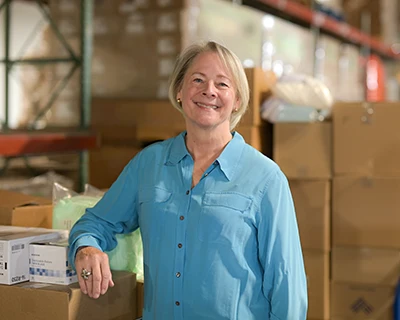 By Teresa Hamilton, Founder & CEO, Giving the Basics
When I founded Giving the Basics in 2011, I wasn’t trying to build one of the nation’s largest hygiene distribution organizations. I was trying to solve a problem almost no one was talking about.
A mother needed toilet paper.
She had food.
She had shelter.
But she didn’t have one of the most basic necessities every family depends on.
That moment forced me to ask a question that has shaped the last fifteen years of my life:
Why have we built an entire national system to address hunger, but almost no infrastructure to address hygiene poverty?
The answer isn’t that people don’t care.
It’s that we’ve never built the systems to solve it.
We Built Food Infrastructure. Now It’s Time to Build Hygiene Infrastructure.
Over the past several decades, the United States has built an extraordinary infrastructure to address hunger. Food banks, nutrition programs, nonprofit partnerships, corporate food recovery efforts, and community organizations work together every day to ensure families have access to food.
That system didn’t happen by accident. It was built through decades of investment, collaboration, innovation, and a shared belief that no one should go hungry.
Today, it’s woven into the fabric of communities across America.
But while we’ve made tremendous progress in addressing food insecurity, another essential need has remained largely invisible.
Hygiene.
Every day, families still struggle to afford soap, shampoo, deodorant, toothpaste, laundry detergent, diapers, menstrual products, and toilet paper. These aren’t luxuries. They’re necessities that affect health, education, employment, and dignity.
Yet there is no comparable national infrastructure to ensure reliable access to these products.
Hygiene deserves that same commitment.
Hygiene Poverty Is Still Treated Like an Afterthought
One of the biggest challenges in addressing hygiene poverty is that most people don’t realize it exists.
Communities understand hunger. Businesses organize food drives. Schools partner with food pantries. Public policy recognizes food insecurity as a challenge worthy of investment.
Hygiene poverty has never received that same attention.
Instead, hygiene products are often viewed as optional extras—items that might be donated if there’s room in the budget or leftover space in a collection bin.
But for the families experiencing hygiene poverty, there’s nothing optional about them.
A child without deodorant before school.
A parent unable to wash work clothes.
A senior stretching a bottle of shampoo far beyond its intended use.
These situations don’t make headlines, but they happen every day in communities across our country.
Many of these families are doing everything right. They’re working, budgeting carefully, and using every available resource. Yet because programs like SNAP are designed to purchase food—not personal care products—they’re still expected to cover hygiene essentials out of an already stretched household budget.
When money is tight, food comes first.
Housing comes first.
Utilities come first.
Too often, hygiene is what’s left behind.
That’s not because communities don’t care.
It’s because we’ve never built the infrastructure to support hygiene with the same intentionality we’ve brought to food.
We Don’t Have a Product Problem. We Have an Infrastructure Problem.
After more than 15 years in this work, I’ve become convinced of something that surprises many people.
America doesn’t have a shortage of hygiene products.
Every year, manufacturers produce millions of bars of soap, bottles of shampoo, tubes of toothpaste, and countless other essential personal care items. Retailers manage changing inventory. Companies update packaging, discontinue product lines, or transition to new formulas. Businesses across the country are looking for meaningful ways to reduce waste while giving back to their communities.
The products exist.
The generosity exists.
The desire to help exists.
What has been missing is a coordinated system that connects those resources to the communities that need them most.
That’s where hygiene banking becomes so important.
A hygiene bank is more than a warehouse. It’s a piece of community infrastructure. It creates a reliable pathway that allows manufacturers, corporations, volunteers, schools, nonprofits, and local agencies to work together as part of one connected network.
Instead of relying on occasional product drives or one-time donations, a strong hygiene infrastructure creates consistency. It allows products to move efficiently, communities to plan ahead, and partners to respond quickly when needs arise.
At Giving the Basics, we’ve spent the past 15 years building that kind of system—not because we believe we’re the only organization that can solve hygiene poverty, but because we believe every community deserves access to a model that works.
The goal has never been to become the largest hygiene bank.
The goal has always been to help build a future where no family has to wonder where they’ll find something as basic as soap, toothpaste, or toilet paper.
America’s Hygiene Hub
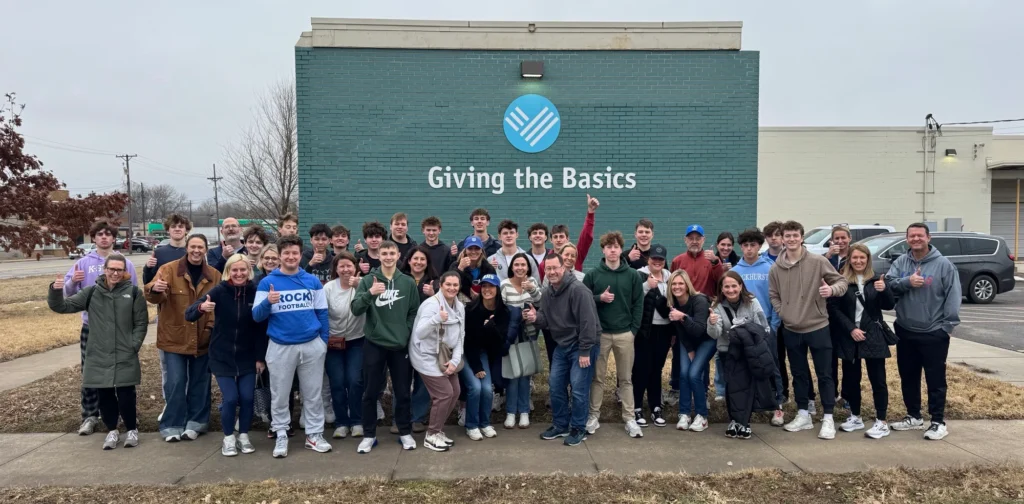
That vision is why we call Giving the Basics America’s Hygiene Hub.
We have grown beyond distributing hygiene products. Today, we connect manufacturers, corporate partners, schools, nonprofit organizations, volunteers, and community leaders through one coordinated network designed to move essential hygiene products where they’re needed most.
Every partnership strengthens that network.
Every donation makes it more resilient.
Every school, nonprofit, and community partner helps create a future where access to basic hygiene is no longer determined by a family’s income.
This isn’t simply about distributing products.
It’s about building infrastructure that lasts.
The Future of Hygiene Banking
I believe we’re standing at the beginning of something much bigger than one organization.
Awareness of hygiene poverty is growing. Schools are recognizing the connection between hygiene and student success. Businesses are looking for meaningful ways to reduce waste while strengthening communities. Manufacturers are seeking better ways to recover products that would otherwise go unused. More nonprofit organizations are recognizing that hygiene access is essential to the families they serve.
Those aren’t isolated efforts.
They’re the foundation of a movement.
Imagine if every school had reliable access to hygiene products for students in need.
Imagine if every manufacturer had an efficient way to redirect excess inventory into communities instead of landfills.
Imagine if every community viewed hygiene access as essential infrastructure—just like food assistance.
That’s the future I believe we can build together.
The work ahead isn’t about building one organization.
It’s about building a movement.
Because no family should have to wonder where they’ll find something as basic as soap, toothpaste, or toilet paper.
Infrastructure changes lives.
It’s time we built it for hygiene.