
By Chandra Goebel, Chief Operating Officer, Giving the Basics
“Making friends was out of the question.”
That’s how one student described their experience of going to school without reliable access to basic hygiene products.
Feeling self-conscious about their appearance and worried about what classmates might think, the student struggled to connect with peers, fell behind academically, and eventually found it difficult to even motivate themselves to attend school.
Something many of us take for granted, having access to everyday products like soap, toothpaste, and deodorant, had become a barrier to feeling comfortable and confident at school.
But after receiving hygiene products through Giving the Basics, things began to change.
“After I received the donations from Giving the Basics, I was coming to school feeling clean and confident, much better than I had felt in a long time.”
The student went on to describe making friends, improving academically, and finding renewed hope for the future.
Their experience reveals something important: hygiene products do much more than help students stay clean. They can help remove barriers to learning, building relationships, and feeling like they belong.
And when students don’t have these essentials at home, schools are often the first place they turn for help.
Hear directly from a student about how access to basic hygiene products changed their school experience.
How Does a Lack of Basic Hygiene Products Affect Students?
When we think about what students need to succeed in school, we often picture backpacks, notebooks, pencils, and computers. But what about shampoo, clean clothes, toothpaste, deodorant, or menstrual products?
For students without consistent access to these essentials, an ordinary school day can come with extraordinary worries.
Imagine trying to concentrate in class while feeling self-conscious about body odor. Avoiding conversations with classmates because you’re worried about your appearance. Or spending the day anxious about whether you have the menstrual products you need.
These concerns can affect much more than a student’s physical comfort. They can influence self-esteem, social relationships, classroom participation, and attendance.
Jessica Janis, a school counselor at Pleasant Hill High School, has witnessed these challenges firsthand. She describes students who struggle with stress, low self-esteem, and difficulty connecting with peers when they lack access to personal care items.
Research supports what school staff are seeing.
According to the 2025 State of the Period Study, conducted by The Harris Poll for PERIOD. and Thinx, 33% of surveyed teens who menstruate reported missing at least 15 minutes of class because they lacked access to period products. Additionally, 39% reported being unable to do their best on schoolwork because of limited access to these essentials.
These findings illustrate how something as basic as having the right hygiene product at the right time can affect a student’s education.
Why Are Schools Stepping In to Meet Hygiene Needs?
School nurses, counselors, teachers, and administrators often recognize needs that extend far beyond academics.
Sometimes students ask for help. Other times, a trusted staff member notices that something is wrong and creates an opportunity for a student to share what they’re experiencing.
Bryan Shaw Sr., an administrator with Kansas City Public Schools, recalled two occasions when students confided in him about circumstances at home that prevented them from meeting their personal hygiene needs.
Because he had access to Giving the Basics care packages, he was able to provide the supplies they needed and help them continue their school day.
These moments demonstrate the important role schools play in supporting the whole student.
As Janis explains:
“Giving the Basics tells these students that they matter, someone cares about them, they are worthy, and that their school is a place that will help take care of them.”
Her experience echoes what other educators are seeing. In School Nurses Share the Power of Hygiene Access for Students, school nurses describe how having essential products available helps students avoid missed class time, feel more comfortable asking for help, and focus on learning.
Schools are uniquely positioned to recognize these needs and provide support in an environment where students already have relationships with trusted adults.
But educators shouldn’t have to meet these challenges alone. Community partnerships help put essential products within reach so school staff can focus on what they do best: supporting students.
What Hygiene Products Do Students Need Most?
At Giving the Basics, we currently serve 1,175 schools, helping provide essential hygiene items for students who might otherwise go without.
And the needs extend well beyond what people might expect.
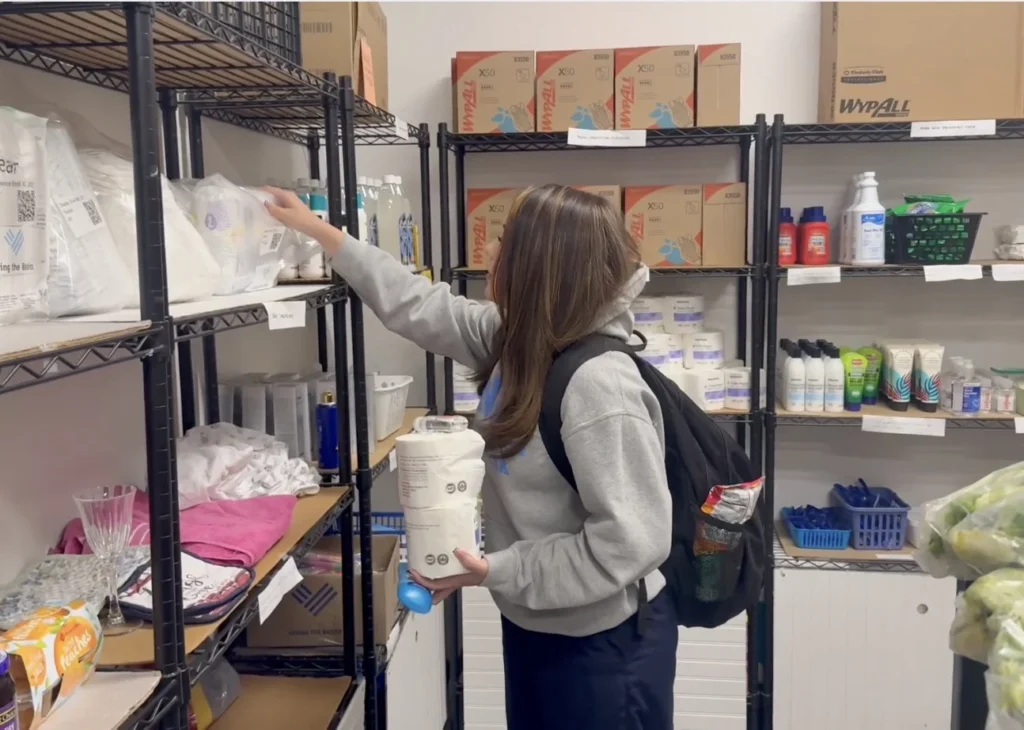
In just one month, Giving the Basics supplied school partners with:
- 141,024 laundry sheets to help students and families care for their clothing.
- 191,700 menstrual hygiene products, including pads and tampons.
- 29,544 deodorants to support students’ personal hygiene and confidence.
- 22,425 toothbrushes and 19,788 tubes of toothpaste for daily oral care.
- 19,440 bottles of shampoo to help students care for their hair.
These numbers reflect actual products supplied to schools in response to the needs identified by their staff.
Behind each product is a student who may be facing challenges that classmates and teachers cannot see.
Laundry detergent can help a student feel more comfortable wearing clean clothes to school. Deodorant can ease the anxiety of standing close to peers. Menstrual products can help students get through the day without worrying about an embarrassing accident.
These are everyday necessities. But when families are struggling financially, even basic personal care products can become difficult to afford.
For a student, access to those products can change how they experience their entire school day.
What Changes When Students Have Access to Hygiene Products?
Sometimes the impact can be seen in something as simple as a smile.
Barb Eisenach, a registered nurse at Central High School, recalled a student who typically appeared sad and kept their head down. After receiving help with personal hygiene and new hygiene supplies, the student left with a smile on their face.
In another Kansas City school, student support staff member Amberly Kirkwood described a student who struggled with access to menstrual products. The fear of an accident at school affected the student’s confidence and interactions with classmates. Once the student had access to the products she needed, staff observed that she became more confident and sociable.
These stories show what hygiene access can mean in a student’s daily life.
It’s not simply about supplying a bottle of shampoo or a package of pads. It’s about helping students feel comfortable around their classmates, participate in school activities, and spend less time worrying about something beyond their control.
For the student whose story opened this article, the change extended well beyond the school day. After receiving hygiene products, they began building friendships and making academic progress.
The student described the impact in their own words:
“Giving the Basics not only supplied me with the material items that I needed, and more importantly, it gave me hope for my future.”
That hope is what makes this work so meaningful.
Every Student Deserves to Feel Clean, Confident, and Ready to Learn
A student’s ability to learn shouldn’t be limited by whether they have toothpaste at home, clean clothes to wear, or deodorant before school.
Yet for many students, these everyday essentials can make the difference between feeling comfortable in the classroom and spending the day worried about being judged.
Through partnerships with 1,175 schools, Giving the Basics helps ensure that school staff have access to hygiene products for students who need them.
And the impact extends far beyond the products themselves.
It’s the confidence to raise a hand in class.
The comfort to sit beside a friend.
The feeling of knowing someone cares.
When schools and communities work together to address hygiene insecurity, they help remove barriers that can keep students from fully participating in their education.
Every student deserves the opportunity to walk into school feeling clean, confident, and ready to learn.
Help Students Have the Basics They Need
Your support helps Giving the Basics provide essential hygiene products to school partners, giving students greater confidence, dignity, and the opportunity to focus on learning.