How manufacturers evaluate product recovery strategies that reduce waste, protect brand value, support sustainability goals, and create lasting community impact.

Joe Creedon
Product Procurement | Giving the Basics
Joe Creedon leads product procurement for Giving the Basics, building partnerships with manufacturers, retailers, and corporate donors to secure millions of hygiene products each year. His work helps transform excess inventory into essential resources that strengthen communities while reducing waste.
Every product eventually reaches a decision point.
A customer changes an order. Packaging is updated. A product line is discontinued. Manufacturing yields exceed demand. Inventory with a shorter remaining shelf life no longer fits a retailer’s requirements.
When that happens, manufacturers have several options. They can continue storing the inventory, liquidate it through secondary markets, recycle it, dispose of it, or donate it.
Each option has a place. The right decision depends on the product, the company’s business objectives, and the value each pathway creates.
At Giving the Basics, we work with manufacturers, retailers, and distributors every day who choose product donation—not because it’s the easiest option, but because it’s often the one that delivers the greatest overall value. A well-planned donation strategy can reduce operational costs, support corporate sustainability initiatives, protect brand integrity, and provide essential hygiene products to communities that need them most.
Understanding why manufacturers make that choice begins with understanding what excess inventory really represents.
Excess Inventory Isn’t Failure—It’s a Normal Part of Manufacturing
No manufacturer plans to produce excess inventory, but nearly every manufacturer experiences it.
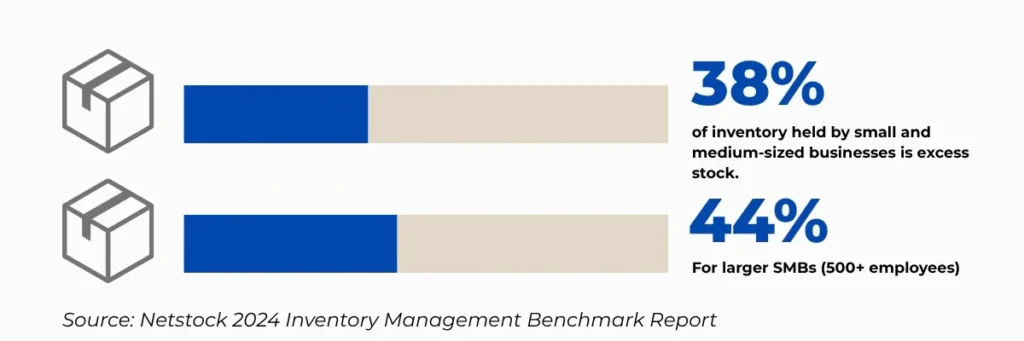
Source: Netstock 2024 Inventory Management Benchmark Report
Production forecasts change. Customer requirements shift. Retail packaging is refreshed. Product formulations evolve. Seasonal demand rises and falls. Sometimes inventory simply outlasts its commercial sales window.
In many cases, those products remain perfectly safe, high quality, and fully usable.
The challenge isn’t the product itself.
The challenge is determining the best path forward.
That’s why leading manufacturers increasingly think beyond disposal and ask a different question: Which recovery strategy creates the greatest overall value?
For years, many companies viewed excess inventory primarily as a storage or disposal issue. Today, more manufacturers are approaching it differently—as an opportunity to recover value while advancing broader business objectives.
That shift in thinking is changing how companies evaluate their options.
When Liquidation Makes Sense
Liquidation remains an important tool in inventory management.
If products still have commercial demand, secondary markets can help manufacturers recover a portion of their costs while quickly reducing inventory levels. For some product categories, liquidation is the most practical business decision.
But liquidation isn’t always the best fit.
Some products are manufactured exclusively for a specific customer. Others carry branding, packaging, or contractual restrictions that make resale inappropriate. In some cases, the cost of moving products through secondary markets outweighs the potential financial return.
Manufacturers also consider how liquidation may affect brand perception, customer relationships, and pricing integrity.
When those factors come into play, donation often becomes an attractive alternative—not simply as an act of corporate giving, but as a strategic product recovery solution. For many manufacturers, the decision isn’t about choosing between doing good and doing business—it’s about identifying the recovery strategy that creates the greatest overall value.
Why More Manufacturers Are Choosing Donation
Product donation allows companies to create value from inventory that can no longer be sold through traditional retail channels.
Instead of paying to store or dispose of usable products, manufacturers can redirect them to organizations equipped to distribute them efficiently and responsibly.
For many companies, that decision delivers multiple benefits.
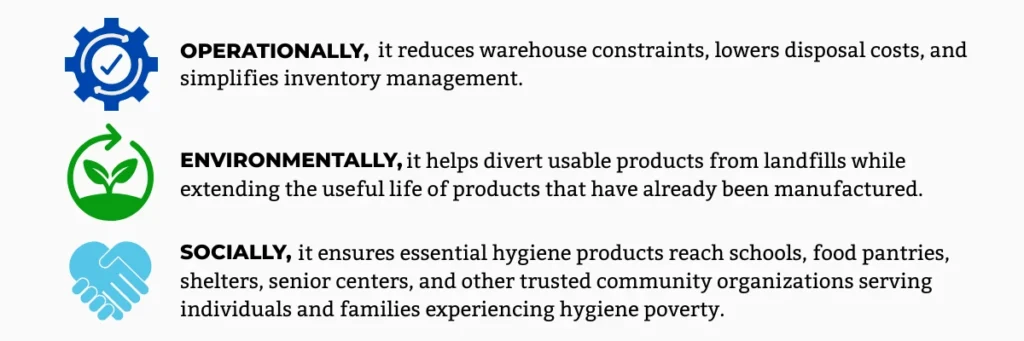
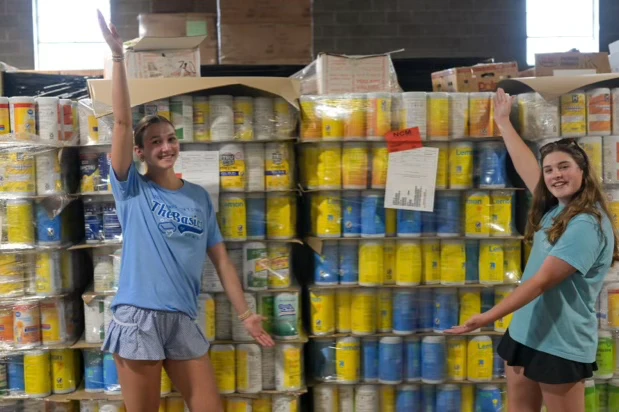
At Giving the Basics, we’ve seen firsthand how one truckload of donated hygiene products can support hundreds of community partners and improve access to essential products for thousands of people.
In 2025 alone, Giving the Basics procured and distributed more than $9 million worth of hygiene products through our growing network of community partners—demonstrating how strategic product recovery can create measurable impact at scale.
Protecting Brand Integrity Through the Right Distribution Partner
Choosing to donate products requires trust.
Manufacturers want confidence that their products will be handled professionally, stored appropriately, and distributed to the intended recipients in a way that reflects their brand standards.
That’s why selecting the right distribution partner matters.
An experienced distribution partner provides the infrastructure needed to receive truckload quantities, manage inventory responsibly, maintain product integrity, and distribute donations through established community networks.
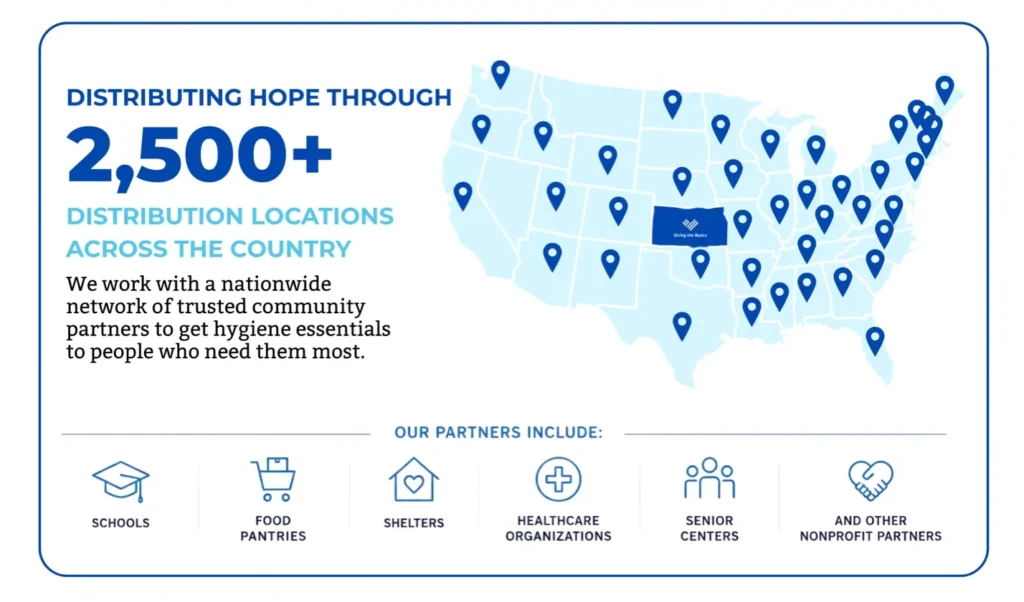
At Giving the Basics, our role extends far beyond warehousing products. We coordinate with manufacturers to ensure donations are received efficiently, documented appropriately, and distributed through trusted schools, food pantries, shelters, healthcare organizations, senior centers, and other nonprofit partners.
That transparency gives companies confidence that their donations are creating meaningful community impact while protecting the reputation they’ve worked hard to build.
“Confidence comes from transparency, traceability, and the ability to execute consistently—knowing the product will be handled, stored, and distributed in a way that reflects our standards and protects our customers’ brands.”
— Cohere Beauty
Supporting Sustainability and Corporate Responsibility
Sustainability has become an essential part of modern manufacturing.
Companies are increasingly evaluating how products move through their entire lifecycle—from sourcing and production to recovery and responsible end-of-life management.
Donating safe, usable products instead of discarding them supports this broader approach by reducing waste and maximizing the value of resources that have already been invested in manufacturing.
Increasingly, companies are measuring success not only by what they manufacture, but also by how responsibly they manage products throughout their lifecycle. Product donation has become one way manufacturers align operational decisions with corporate sustainability commitments while extending the value of products that are still safe and usable.
It can also contribute to Environmental, Social, and Governance (ESG) objectives.
- Environmental: Reduces unnecessary waste by diverting usable products from disposal.
- Social: Expands access to essential hygiene products for individuals and families experiencing hygiene poverty.
- Governance: Demonstrates responsible inventory management through transparent partnerships and documented product recovery.
While every company’s ESG priorities are different, product donation has become an increasingly valuable strategy for organizations seeking to align operational decisions with measurable community impact.
Planning a Successful Product Donation
Before donating excess inventory, manufacturers should consider several practical questions.
- Is the product safe, compliant, and appropriate for community distribution?
- How much shelf life remains?
- Does the receiving organization have the capacity to accept truckload or pallet quantities?
- What documentation is required for inventory records, ESG reporting, or financial purposes?
- Have you consulted your finance or tax advisor regarding potential inventory donation benefits?
Working through these questions early helps ensure a smooth donation process and maximizes the value of every shipment.
Why Giving the Basics
At Giving the Basics, we’ve spent more than 15 years helping manufacturers transform excess inventory into community impact. We believe excess inventory should never be viewed simply as surplus.
It represents an opportunity to strengthen communities while helping manufacturers meet operational, sustainability, and social impact goals.
Through America’s Hygiene Hub, we work directly with manufacturers, retailers, and distributors to recover high-quality hygiene products and distribute them through an established network of schools and nonprofit organizations across the country.
For our corporate partners, that means one trusted organization can manage logistics, documentation, and distribution from warehouse to community.
For the families we serve, it means greater access to the everyday essentials that support health, confidence, and dignity.
Partner With Giving the Basics
If your company manufactures, distributes, or sells personal care, household, or hygiene products, your excess inventory may have the potential to create lasting community impact.
Whether you’re evaluating product recovery strategies or exploring a long-term donation partnership, our team can help you develop a solution that aligns with your operational needs and corporate responsibility goals.
Ready to explore whether product donation is the right recovery strategy for your organization? Contact our Product Procurement team at procurement@givingthebasics.org to start the conversation.
The best product recovery strategy doesn’t just reduce inventory—it creates value long after the product leaves the warehouse.
How manufacturers evaluate product recovery strategies that reduce waste, protect brand value, support sustainability goals, and create lasting community impact.
Joe Creedon leads product procurement for Giving the Basics, building partnerships with manufacturers, retailers, and corporate donors to secure millions of hygiene products each year. His work helps transform excess inventory into essential resources that strengthen communities while reducing waste.
Joe Creedon
Product Procurement | Giving the Basics
Every product eventually reaches a decision point.
A customer changes an order. Packaging is updated. A product line is discontinued. Manufacturing yields exceed demand. Inventory with a shorter remaining shelf life no longer fits a retailer’s requirements.
When that happens, manufacturers have several options. They can continue storing the inventory, liquidate it through secondary markets, recycle it, dispose of it, or donate it.
Each option has a place. The right decision depends on the product, the company’s business objectives, and the value each pathway creates.
At Giving the Basics, we work with manufacturers, retailers, and distributors every day who choose product donation—not because it’s the easiest option, but because it’s often the one that delivers the greatest overall value. A well-planned donation strategy can reduce operational costs, support corporate sustainability initiatives, protect brand integrity, and provide essential hygiene products to communities that need them most.
Understanding why manufacturers make that choice begins with understanding what excess inventory really represents.
Excess Inventory Isn’t Failure—It’s a Normal Part of Manufacturing
No manufacturer plans to produce excess inventory, but nearly every manufacturer experiences it.
Source: Netstock 2024 Inventory Management Benchmark Report
Production forecasts change. Customer requirements shift. Retail packaging is refreshed. Product formulations evolve. Seasonal demand rises and falls. Sometimes inventory simply outlasts its commercial sales window.
In many cases, those products remain perfectly safe, high quality, and fully usable.
The challenge isn’t the product itself.
The challenge is determining the best path forward.
That’s why leading manufacturers increasingly think beyond disposal and ask a different question: Which recovery strategy creates the greatest overall value?
For years, many companies viewed excess inventory primarily as a storage or disposal issue. Today, more manufacturers are approaching it differently—as an opportunity to recover value while advancing broader business objectives.
That shift in thinking is changing how companies evaluate their options.
When Liquidation Makes Sense
Liquidation remains an important tool in inventory management.
If products still have commercial demand, secondary markets can help manufacturers recover a portion of their costs while quickly reducing inventory levels. For some product categories, liquidation is the most practical business decision.
But liquidation isn’t always the best fit.
Some products are manufactured exclusively for a specific customer. Others carry branding, packaging, or contractual restrictions that make resale inappropriate. In some cases, the cost of moving products through secondary markets outweighs the potential financial return.
Manufacturers also consider how liquidation may affect brand perception, customer relationships, and pricing integrity.
When those factors come into play, donation often becomes an attractive alternative—not simply as an act of corporate giving, but as a strategic product recovery solution. For many manufacturers, the decision isn’t about choosing between doing good and doing business—it’s about identifying the recovery strategy that creates the greatest overall value.
Why More Manufacturers Are Choosing Donation
Product donation allows companies to create value from inventory that can no longer be sold through traditional retail channels.
Instead of paying to store or dispose of usable products, manufacturers can redirect them to organizations equipped to distribute them efficiently and responsibly.
For many companies, that decision delivers multiple benefits.
At Giving the Basics, we’ve seen firsthand how one truckload of donated hygiene products can support hundreds of community partners and improve access to essential products for thousands of people.
In 2025 alone, Giving the Basics procured and distributed more than $9 million worth of hygiene products through our growing network of community partners—demonstrating how strategic product recovery can create measurable impact at scale.
Protecting Brand Integrity Through the Right Distribution Partner
Choosing to donate products requires trust.
Manufacturers want confidence that their products will be handled professionally, stored appropriately, and distributed to the intended recipients in a way that reflects their brand standards.
That’s why selecting the right distribution partner matters.
An experienced distribution partner provides the infrastructure needed to receive truckload quantities, manage inventory responsibly, maintain product integrity, and distribute donations through established community networks.
At Giving the Basics, our role extends far beyond warehousing products. We coordinate with manufacturers to ensure donations are received efficiently, documented appropriately, and distributed through trusted schools, food pantries, shelters, healthcare organizations, senior centers, and other nonprofit partners.
That transparency gives companies confidence that their donations are creating meaningful community impact while protecting the reputation they’ve worked hard to build.
“Confidence comes from transparency, traceability, and the ability to execute consistently—knowing the product will be handled, stored, and distributed in a way that reflects our standards and protects our customers’ brands.”
— Cohere Beauty
Supporting Sustainability and Corporate Responsibility
Sustainability has become an essential part of modern manufacturing.
Companies are increasingly evaluating how products move through their entire lifecycle—from sourcing and production to recovery and responsible end-of-life management.
Donating safe, usable products instead of discarding them supports this broader approach by reducing waste and maximizing the value of resources that have already been invested in manufacturing.
Increasingly, companies are measuring success not only by what they manufacture, but also by how responsibly they manage products throughout their lifecycle. Product donation has become one way manufacturers align operational decisions with corporate sustainability commitments while extending the value of products that are still safe and usable.
It can also contribute to Environmental, Social, and Governance (ESG) objectives.
- Environmental: Reduces unnecessary waste by diverting usable products from disposal.
- Social: Expands access to essential hygiene products for individuals and families experiencing hygiene poverty.
- Governance: Demonstrates responsible inventory management through transparent partnerships and documented product recovery.
While every company’s ESG priorities are different, product donation has become an increasingly valuable strategy for organizations seeking to align operational decisions with measurable community impact.
Planning a Successful Product Donation
Before donating excess inventory, manufacturers should consider several practical questions.
- Is the product safe, compliant, and appropriate for community distribution?
- How much shelf life remains?
- Does the receiving organization have the capacity to accept truckload or pallet quantities?
- What documentation is required for inventory records, ESG reporting, or financial purposes?
- Have you consulted your finance or tax advisor regarding potential inventory donation benefits?
Working through these questions early helps ensure a smooth donation process and maximizes the value of every shipment.
Why Giving the Basics
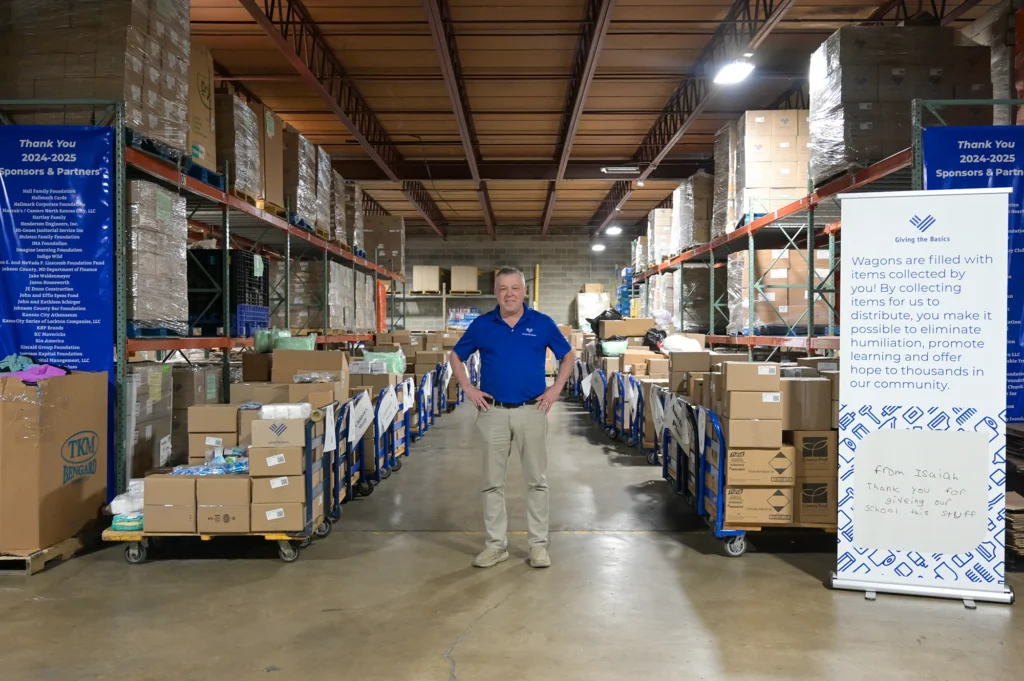
At Giving the Basics, we’ve spent more than 15 years helping manufacturers transform excess inventory into community impact. We believe excess inventory should never be viewed simply as surplus.
It represents an opportunity to strengthen communities while helping manufacturers meet operational, sustainability, and social impact goals.
Through America’s Hygiene Hub, we work directly with manufacturers, retailers, and distributors to recover high-quality hygiene products and distribute them through an established network of schools and nonprofit organizations across the country.
For our corporate partners, that means one trusted organization can manage logistics, documentation, and distribution from warehouse to community.
For the families we serve, it means greater access to the everyday essentials that support health, confidence, and dignity.
Partner With Giving the Basics
If your company manufactures, distributes, or sells personal care, household, or hygiene products, your excess inventory may have the potential to create lasting community impact.
Whether you’re evaluating product recovery strategies or exploring a long-term donation partnership, our team can help you develop a solution that aligns with your operational needs and corporate responsibility goals.
Ready to explore whether product donation is the right recovery strategy for your organization? Contact our Product Procurement team at procurement@givingthebasics.org to start the conversation.
The best product recovery strategy doesn’t just reduce inventory—it creates value long after the product leaves the warehouse.